
Baking Soda vs Baking Powder: What's the Difference?
Baking soda and baking powder are both leavening agents, but they work very differently. Learn which one to use, when, and why.
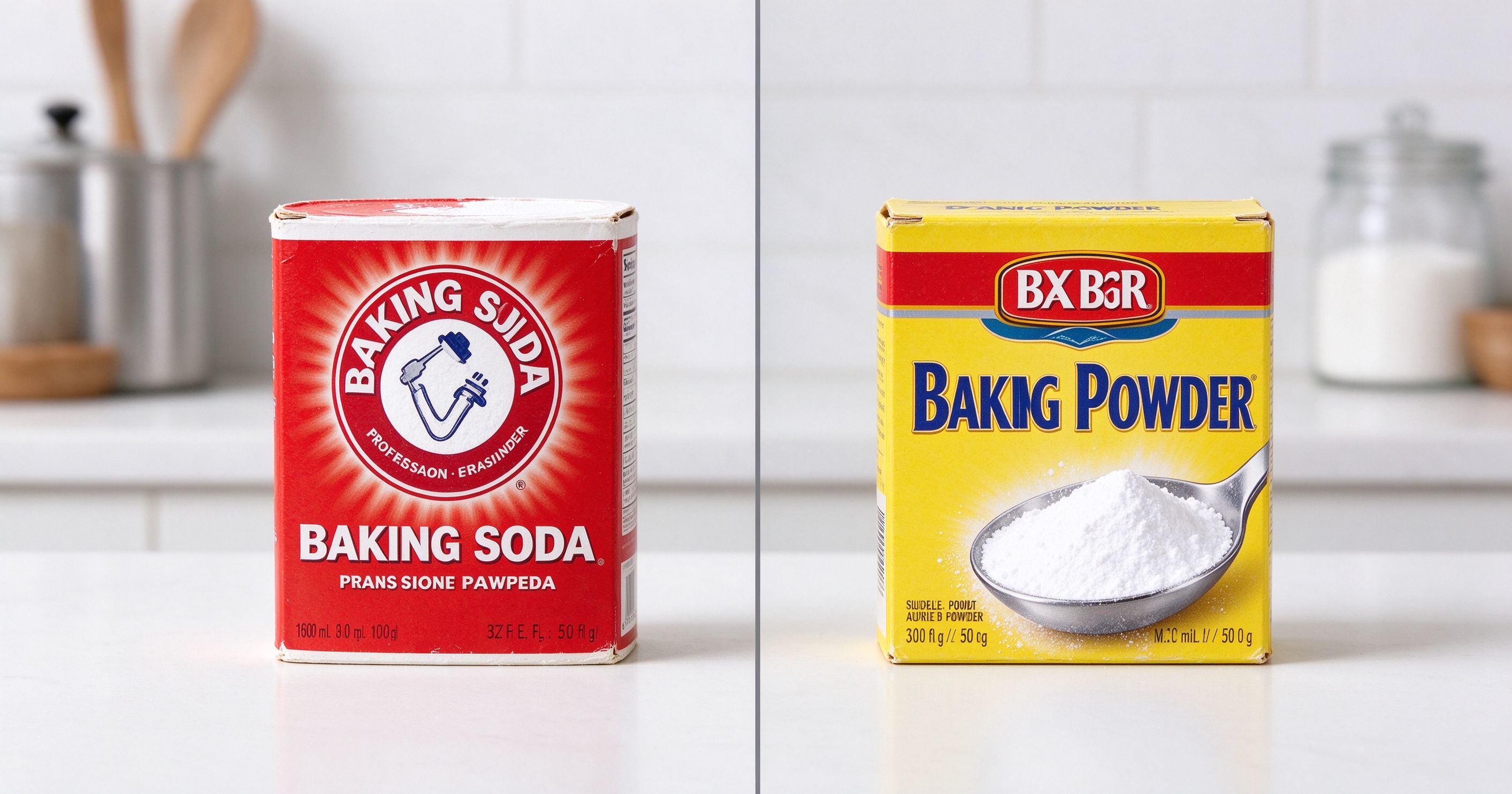
Baking soda and baking powder are both essential leavening agents in baking, but they are not interchangeable. Many home bakers and even new food manufacturers confuse the two, leading to dense, flat, or off-flavored products. Let's break down exactly how they differ.
What is Baking Soda?
Baking soda (sodium bicarbonate) is a pure alkaline compound. On its own, it needs an acid to react and produce carbon dioxide gas. Common acids that activate baking soda include: - Buttermilk - Yogurt - Vinegar - Lemon juice - Brown sugar - Cream of tartar
Baking soda is about **3-4 times stronger** than baking powder, so a little goes a long way.
What is Baking Powder?
Baking powder contains baking soda already mixed with a dry acid (like cream of tartar) and a filler (usually cornstarch) to keep them separate until liquid is added. That means you don't need to add any acidic ingredients to your recipe — just add liquid and it reacts.
Double-acting baking powder (the most common type) reacts once when wet, and a second time when heated in the oven.
Key Differences
| Feature | Baking Soda | Baking Powder | |---------|-------------|---------------| | pH level | Alkaline (base) | Neutral (base + acid pre-mixed) | | Needs acid? | Yes | No | | Strength | 3-4x stronger | Mild | | Reaction speed | Fast, immediately when wet | Slower, two stages | | Taste | Can leave soapy/salty taste if too much | Neutral taste |
When to Use Which
### Use baking soda when: - Your recipe already contains acidic ingredients (buttermilk, yogurt, chocolate, honey, brown sugar) - You want browning (baking soda raises pH, which helps Maillard browning) - Making cookies, quick breads with acidic ingredients - You need a strong rise in a short bake time
### Use baking powder when: - Your recipe has no acidic ingredients (plain cakes, muffins, pancakes) - You want consistent, predictable results without adjusting pH - Making scones, biscuits, pancakes, cakes - You're producing at scale and need forgiving, consistent performance
Common Mistakes
1. **Using baking soda instead of baking powder**: If your recipe has no acid, baking soda won't react — you'll get a dense, flat product that also tastes soapy. 2. **Using too much baking soda**: Since it's stronger, too much leaves a soapy, metallic aftertaste. 3. **Old baking powder**: Baking powder loses potency over time. Test it by adding a spoonful to hot water — it should fizz vigorously.
For Food Manufacturers
At scale, consistency is everything. Most commercial bakeries use double-acting baking powder for most applications because it's more forgiving and doesn't require adjusting recipe pH. Baking soda is reserved for specific products where browning or acid-neutralization is needed.
Fusanhe supplies both food-grade baking soda (sodium bicarbonate) and double-acting baking powder in retail and industrial packaging. Contact us for samples and technical support.